Medtech & Art
Art has always played a major part in medical advances. These can range from imaging technologies, to designing artificial valves, to the artistic flair many surgeons develop and exhibit in their surgical techniques. The capability for replacing valves and organs has exponentially increased in the last few decades. Artists have been involved in 3D printed valves, as well as designing many intricate artificial metal and plastic pieces to replace various parts of the body. Artists are also highly involved in the process of creating and applying prosthetic limbs and other extremities. The casting process for a prosthetic is actually very similar to casting techniques for duplicating works of art or statues.
https://www.nsf.gov/news/mmg/media/images/artificial_valve5_f.jpg
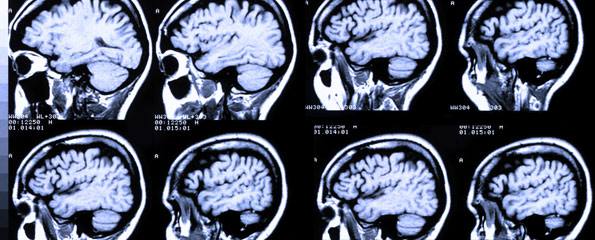
Imaging technology has progressed incredibly in the last few decades. After the introduction of radiation research by the Curie's almost immediately it was adapted to imaging technologies. Yet an artist was the one who discovered that image could be transferred onto a magnetized surface. Further research revealed the potential dangers that radiation could pose, and artists introduced other imaging technologies such as the MRI. Magnetic Resonance Imaging has removed the risks involved with radiation and can enable doctors to see internal organs and marked vessels within the body itself. MRI machines essentially take us into the realm of science fiction and imaging technology will only continue to drastically improve in the coming years.
https://www.myvmc.com/wp-content/uploads/2013/10/brain-scan.jpg
Many surgeons are actually quite good artists. Most I have met have at least some sort of a hobby involving the arts, oftentimes drawing or painting. I believe this is primarily for two reasons. The first is that the steadiness of their hands and their ability to picture 3D structures without visually seeing them gives them a natural tenacity for the arts. The second is that surgery itself is very nearly an art form. Many surgeons develop personal techniques for various surgeries, and they are allowed to do so as long as it is effective. They must also think on the fly almost constantly as new problems arise. This requires them to perform operations in various ways rather than following a specific formula. Just like an artist, surgeons discover what works for them and then make it their own as they develop their skill.
https://www.gannett-cdn.com/authoring/2007/06/03/NRCD/ghows-SR-a571b945-5bd8-432a-8074-5bce8e95999b-4909c27c.jpeg?crop=646,484,x43,y0&quality=50&width=640
Image Source:
Goforth, Sarah. “Artificial Heart Valves Face the Curdled Milk Test.” National Science Foundation, 26 Apr. 2005, https://www.nsf.gov/discoveries/disc_summ.jsp?cntn_id=103066&org=NSF. Accessed 23 May 2022.
VMC, My. “3D Magnetic Resonance Imaging (3D MRI).” Virtual Medical Care, 17 Feb. 2017, https://www.myvmc.com/investigations/3d-magnetic-resonance-imaging-3d-mri/. Accessed 23 May 2022.
Writer, Staff. “James Morrissey — Husband, Father, Physician.” Stockton Record, 2 June 2007, https://www.recordnet.com/story/opinion/letters/2007/06/03/james-morrissey-husband-father-physician/52882928007/. Accessed 23 May 2022.
References:
Abdul-Majid, Samir et al. “Corrosion Imaging and Thickness Determination Using Micro-Curie Radiation Sources Based on Gamma-Ray Backscattering: Experiments and MCNP Simulation.” Research in nondestructive evaluation 26.1 (2015): 43–59. Web.
Cesareo, Roberto. “X-Ray Fluorescence (XRF and PIXE) in Medicine / Editor, Roberto Cesareo.” Ed. Roberto Cesareo. Rome: Field Educational Italia, Acta medica, 1982. Print.
Emery, Alan E. H., and Marcia L. H. Emery. Surgical and Medical Treatment in Art / Alan E.H. Emery and Marcia L.H. Emery ; Foreword by Sir John Hanson. London: Royal Society of Medicine Press, 2006. Print.
Frankel, William C, and Tom C Nguyen. “Artificial Heart Valves.” JAMA : the journal of the American Medical Association 325.24 (2021): 2512–2512. Web.
Stark, David D., and William G. Bradley. Magnetic Resonance Imaging / [edited by] David D. Stark, William G. Bradley, Jr. 3rd ed. St. Louis: Mosby, 1999. Print.



Comments
Post a Comment